Unlock precision laser cutting and engraving for your next project. Get Your Free Quote
Engineering Deep Dive

The Technology Behind Full Spectrum Laser

From laser source selection to software architecture, here is an honest look at the engineering decisions that define our CO2 and fiber laser systems.

CO2 Laser Tube Technology
Laser Source

CO2 Laser Tubes: RECI Glass Tubes with 8,000+ Hour Rated Life


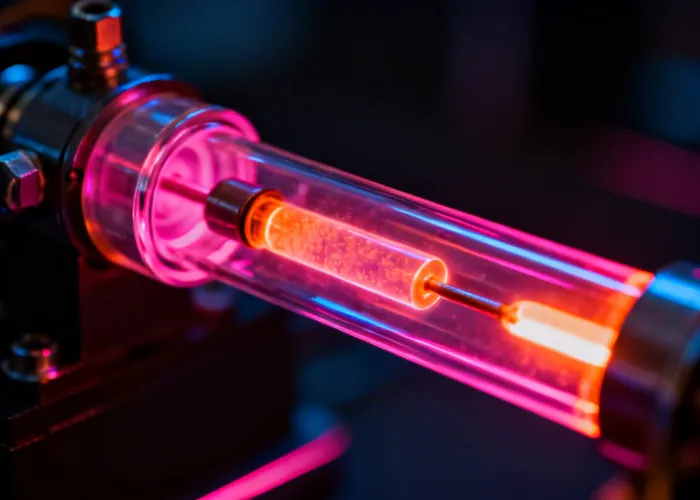
Our Muse and Pro Series systems use sealed RECI glass CO2 laser tubes operating at 10.6 micrometers wavelength. We chose RECI tubes after testing five different suppliers over a two-year period from 2010 to 2012. The selection criteria came down to three measurable factors: beam mode quality (TEM00 stability over 1,000+ hours), rated lifespan (RECI delivers 8,000+ hours versus 3,000-5,000 for many alternatives), and power output consistency (less than 5% drift over the rated lifespan at nominal current).

An important limitation to acknowledge: glass CO2 tubes are consumable components. They degrade over time regardless of manufacturer. At typical usage rates of 4-6 hours per day, 5 days per week, users can expect approximately 5-7 years before replacement. We stock replacement tubes for every model and publish installation guides that allow most users to complete the swap themselves in about one hour.
10.6 um Wavelength
40-120W Power Range
8,000+ Rated Hours
Fiber Laser Metal Marking
Fiber Module

Raycus Fiber Lasers: Metal Marking and Cutting at 1064nm


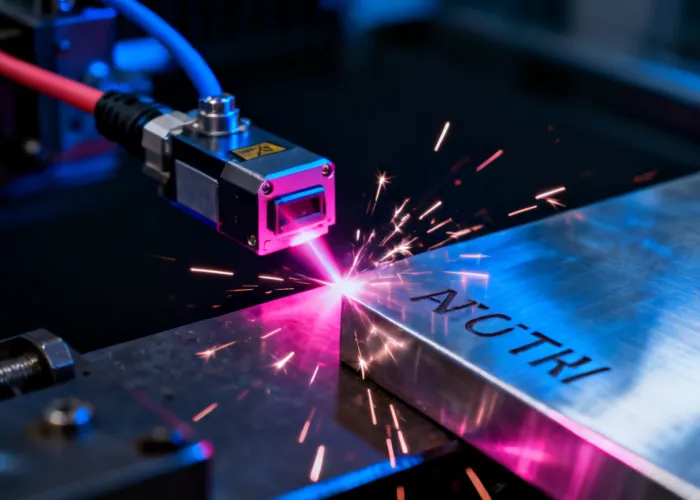
Starting in 2022, we integrated Raycus fiber laser modules into select platforms to extend capability beyond what CO2 alone can achieve. The 1064nm wavelength of fiber lasers is absorbed by bare metals far more efficiently than the 10.6um CO2 wavelength. This means users can mark, engrave, and in some cases cut stainless steel, aluminum, brass, copper, and titanium directly, without coatings or surface treatments.

We selected Raycus as our fiber source supplier because they offer a price-to-performance ratio that aligns with our market position. Raycus modules at the 20-30W class deliver marking speeds and depth consistent with applications our users actually need: serial numbers, barcodes, logos, and decorative patterns on metal parts. For users requiring deep metal cutting at industrial volumes, higher-power fiber systems from manufacturers like IPG or Trumpf would be more appropriate, and we are transparent about that boundary.

1064nm Wavelength
20-30W Power Class
50,000+ Rated Hours
Precision Motion System
Motion System

Belt-Driven Gantry: +-0.03mm Positioning Accuracy


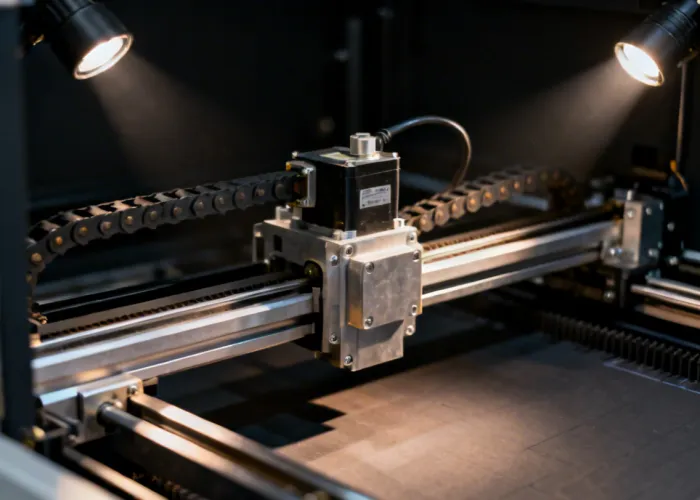
Our motion systems use high-precision stepper motors paired with reinforced timing belts and linear rail guides. The design trades the ultimate precision of ball-screw systems (found in six-figure industrial machines) for significantly faster travel speeds and lower maintenance requirements. At +-0.03mm positioning accuracy, the system delivers results that are indistinguishable from ball-screw machines for the vast majority of cutting and engraving applications our users perform.

The gantry geometry differs between our product lines. Muse systems use a compact single-rail design optimized for the 20" x 12" work area. Pro Series machines use a dual-rail gantry with anti-backlash tensioning that maintains accuracy across the full 48" x 36" travel. Belt tension and rail alignment are set at the factory and verified against a calibration grid before shipping. Users can verify alignment in the field using the test pattern included with the machine.

+-0.03mm Positioning Accuracy
600mm/s Max Travel Speed
1000 DPI Max Engraving Resolution
RetinaEngrave v3.0 Control Software
Software

RetinaEngrave v3.0: Proprietary Control Software Built In-House


RetinaEngrave is developed entirely by our software engineering team in Las Vegas. Unlike machines that rely on third-party controllers (RuiDa, Trocen) where the manufacturer has limited ability to fix bugs or add features, we control the entire software stack from file import to motor control. When users report issues or request features through our community forum, our developers can address them directly in the next release cycle.

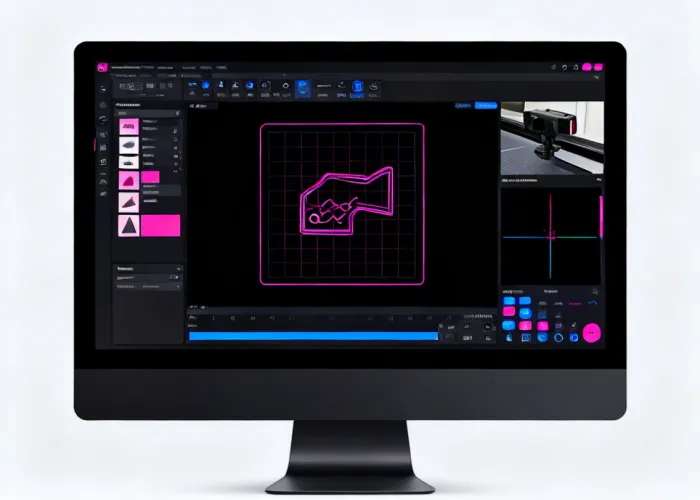
The software accepts SVG, DXF, PNG, and BMP file formats directly. There is no proprietary format requirement. Material presets for 100+ common substrates ship preconfigured, and users can save custom presets for materials not in the default library. The integrated camera module provides a live view of the work surface for precise artwork placement, which is particularly useful when engraving on irregularly shaped objects like tumblers, phone cases, or pre-finished products.

100+ Material Presets
4 Formats SVG, DXF, PNG, BMP
Camera Live Alignment View
Quality Assurance

500+ Hours of Burn-In Testing Before Shipping

Every Full Spectrum Laser unit is assembled and tested at our Las Vegas headquarters. Here is what happens before a machine reaches your workshop.

01

Assembly & Optical Alignment

Each machine is assembled by hand at our Las Vegas facility. The optical path, including mirrors, lens, and laser tube, is aligned using a visible-light alignment laser and verified against a burn-test target to confirm beam centering across the full work area.

02

Burn-In & Stress Testing

Assembled units run continuously for 500+ hours on our test bench, executing a rotating pattern of vector cuts, raster engraves, and idle cycles. Power output is logged at intervals. Units that show drift exceeding specification are pulled for rework.

03

Calibration & Final QC

After burn-in, each machine receives final calibration: motor steps-per-unit, acceleration curves, and default power tables are set and verified. A test cut on reference acrylic stock confirms positioning accuracy, cut quality, and engrave resolution before packaging.

Honest Assessment

What Our Systems Cannot Do


We believe in being upfront about limitations so you can make an informed purchasing decision.

Thick Metal Cutting

Our fiber modules handle marking and engraving on metals, and can cut thin sheet stock under 1mm. For cutting steel plate at 6mm or thicker, you need a 1kW+ fiber laser from a manufacturer like Trumpf, Bystronic, or Amada. We are not in that market segment and do not pretend to be.

PVC and Vinyl

Our CO2 lasers cannot safely process PVC, vinyl, or other chlorine-containing plastics. These materials release hydrochloric acid gas when laser-cut, which is corrosive to machine components and hazardous to operators. This is not a limitation unique to Full Spectrum Laser; it applies to all CO2 laser systems.

Production Speed vs. Industrial Machines

Our belt-driven motion systems top out at approximately 600mm/s travel speed. Industrial machines using linear motors and granite beds achieve significantly faster speeds. For high-volume production requiring 24/7 operation at maximum throughput, an industrial system from Epilog, Trotec, or Universal may be a better fit. Our systems are designed for the price-to-performance sweet spot that serves workshops, makerspaces, and small production environments.

Want to See the Machine in Action?

Schedule a live demo with our team. We will run your material samples and show you exactly what a Full Spectrum Laser can produce.

Schedule a Demo